
Running a Sex Offender Check in Elmore County
The Alabama Sex Offender Registry public search is the main statewide channel for an Elmore County sex offender check. It supports name and location-based paths, with results that can be viewed as a list or map when the interface offers those controls. ALEA’s Criminal Justice Information Services Sex Offender Registry Unit maintains the state system. Local law enforcement registers qualifying people, takes fingerprints and a current photo, and sends the required data to ALEA.
Elmore County does not publish a separate local offender list that replaces the state search. The Sheriff’s Sex Offender Division is the county contact for registration, verification, and a report of an address or proximity concern. A national search through the U.S. Department of Justice adds records from other participating jurisdictions. These channels answer different parts of the same safety question, so a careful check uses the Alabama result first and the national layer when movement across state lines is possible.
Elmore Registry Verification Office
The Elmore County Sheriff’s Sex Offender Division explains the county’s local compliance role. The office is at 8955 U.S. Highway 231, Wetumpka, AL 36092. Its main phone is 334-567-5546, and the published office hours are Monday through Friday, 8:00 a.m. to 4:00 p.m.
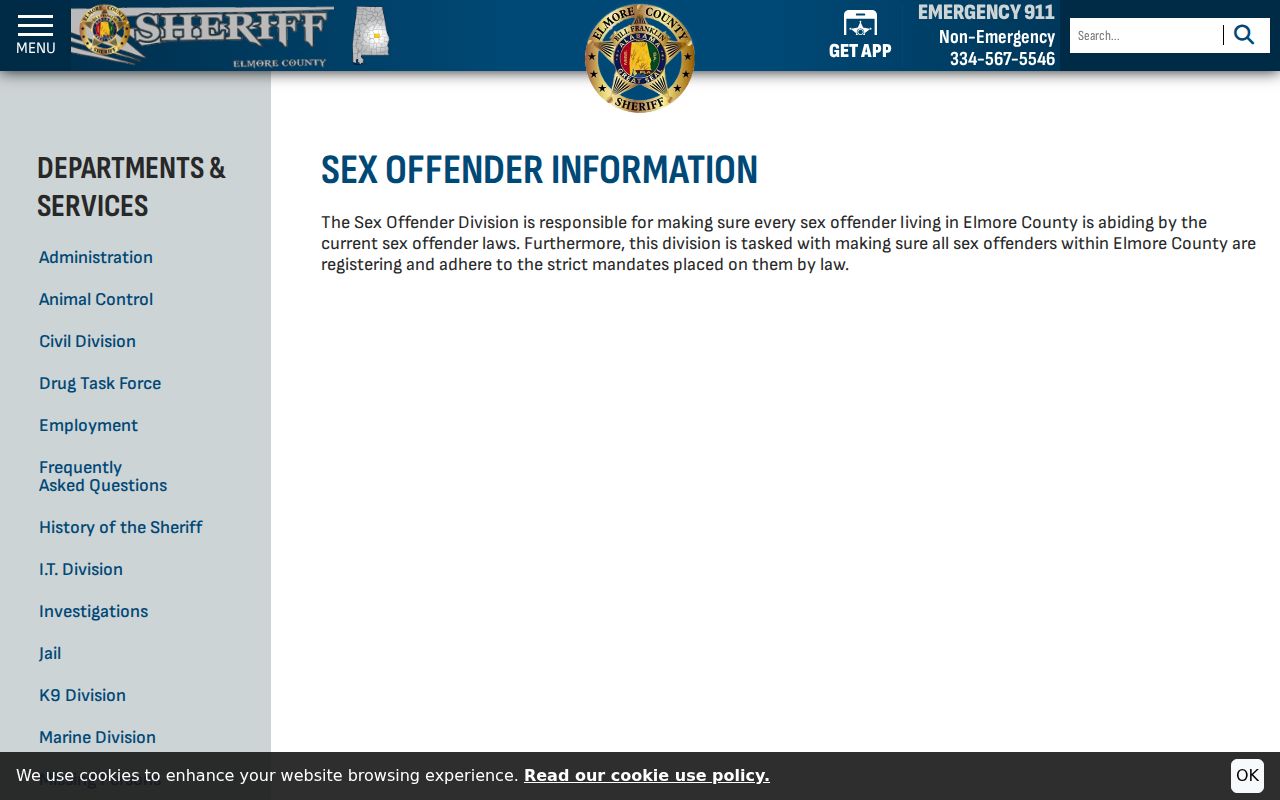
The local division is the right contact for an Elmore County registry address question, compliance concern, or required update. It does not make the public search a perfect live locator.
Sex Offender Division
Elmore County Sheriff’s Office
8955 U.S. Highway 231
Wetumpka, AL 36092
334-567-5546
Monday through Friday, 8:00 a.m. to 4:00 p.m.
Adults subject to Alabama’s registration framework report in person during their birth month and every three months after that. A change in residence or other required information must be reported to local law enforcement. If a listed address seems wrong, report the concern to the Elmore County Sheriff. Do not approach the person or household. Call 911 for immediate danger; for a nonemergency tip, use 334-567-5227 or the main office number.
Searching the Alabama Sex Offender Registry
The ALEA registry overview explains who runs the registry, which records can be public, and how reporting works. The public vendor may show a disclaimer before it opens the search. Interface controls can change, and the exact radius choices were not reliably available during research. Use the live labels rather than assuming a distance.
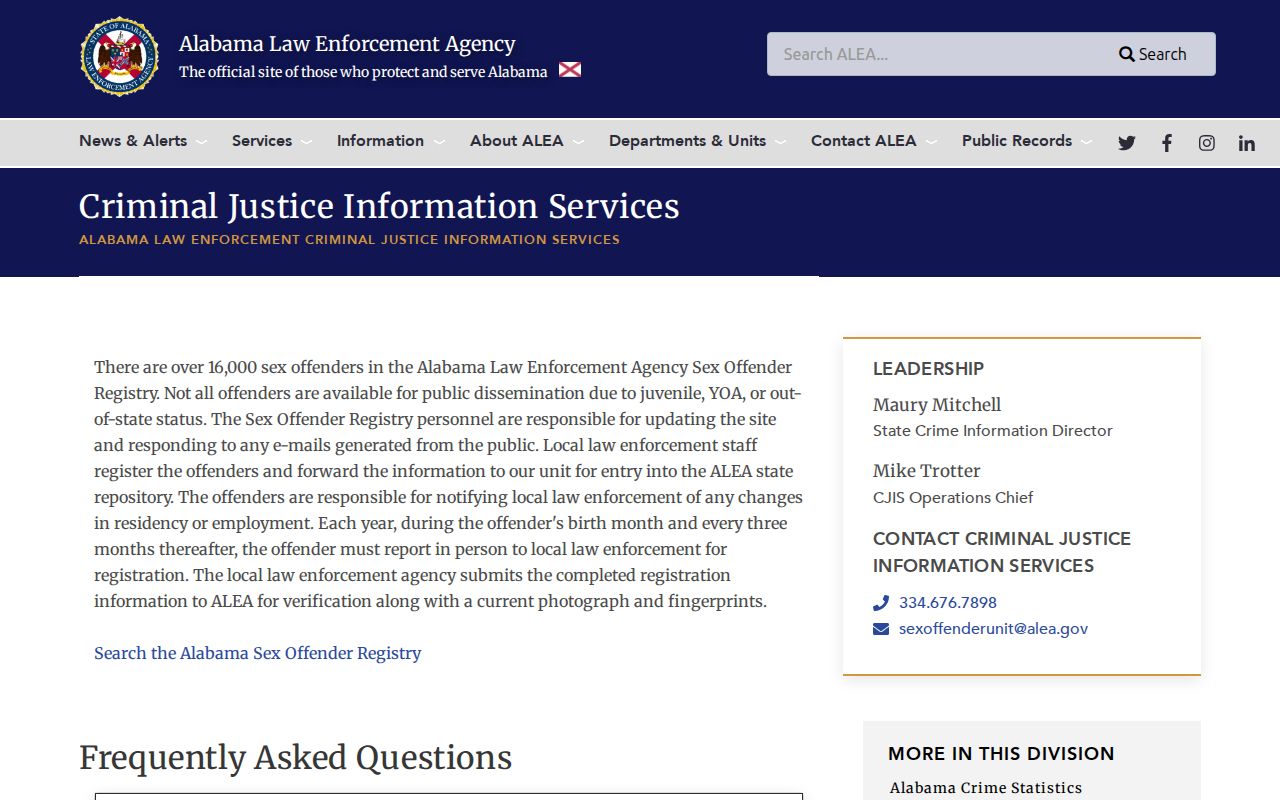
ALEA’s guidance is also the best check on why an expected name may be absent from the public Elmore County registry results.
- Open the Alabama public registry and read or accept the stated conditions of use.
- Search by first and last name, or use an address, city, Elmore County, or ZIP path offered by the live form.
- Review the list or map and compare the public identity details. Do not rely on a name alone.
- Open the profile and read the registration jurisdiction, status, address, offense, and other public fields together.
The available mode determines which fields appear. None of the listed fields should be treated as required in every search path unless the live form marks it that way.
| Field or control | Type | Use | Notes |
|---|---|---|---|
| Last Name / First Name | Text | Name search | Spelling and aliases can affect results |
| Address | Text | Geographic search | Use a valid street, city, or ZIP entry |
| City / County / ZIP | Text or dropdown | Location filter | Select Elmore when searching by county |
| Radius | Dropdown | Area around a location | Options depend on the current interface |
| Search / Clear / Map-List | Button or tab | Run, reset, or change the view | Controls can vary by mode |
| Community notification | Signup link or form | Alerts where offered | May require an address, email, and verification |
ALEA and NSOPW Elmore Searches
The Alabama registry is the direct source for an Elmore County sex offender check. The National Sex Offender Public Website, or NSOPW, searches public registry data from participating states, territories, and tribes. It is useful when a person may have lived elsewhere or when a location lies near a state line.
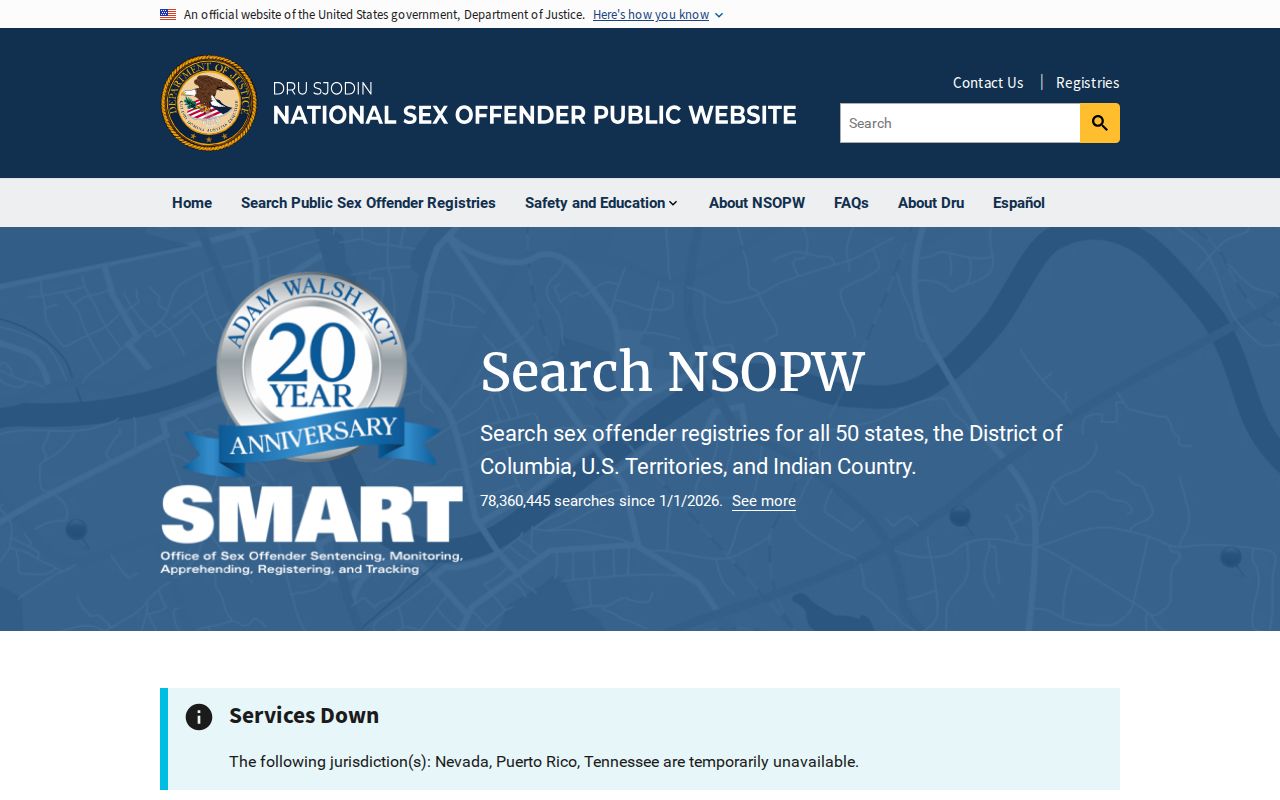
Open the originating jurisdiction’s profile after NSOPW finds a possible match, since that jurisdiction controls the public status and detail.
An empty Alabama search does not rule out a public entry elsewhere. It can also reflect a spelling difference, a name variant, a nonpublic category, a person still incarcerated before the posting point described by ALEA, or a lag in reported data. Conversely, a similar name is not enough to identify a person. Compare the profile’s photo, aliases, age or birth details, physical traits, registration jurisdiction, and public address fields before drawing a conclusion.
Note: Use NSOPW as a cross-state supplement, then verify each possible match through the public registry maintained by the originating jurisdiction.
What a Registry Profile Shows
An Alabama public registry profile can combine identity, location, offense, and compliance information. The public view is not the full registration file. Alabama law and agency rules require some data to be collected securely even when it is not displayed. Read an Elmore County sex offender profile as a set of related fields rather than as a single name or map pin.
| Name and aliases | Published name forms and known aliases used to help distinguish a possible match. |
|---|---|
| Photo and description | Photo, race, sex, height, weight, hair and eye color, and published scars, marks, or tattoos. |
| Address information | Residence information at the public level allowed by law, sometimes paired with a map. |
| Offense information | Offense description, jurisdiction or statute, conviction date, and victim-age category when public. |
| Status | Compliance or registration status and the jurisdiction responsible for the entry. |
| Other public fields | Vehicle, work, or school information may appear when collection and dissemination rules permit it. |
Social Security numbers, state and federal criminal identifiers, passport documents, and similar secure identifiers are not ordinary public-profile fields. A map marker also does not prove where someone is at a given moment. It reflects the address data supplied and published through the registry process.
Elmore Registry Collection Versus Publication
Collection does not always mean public display. Alabama’s registration rules can require law enforcement to retain fingerprints, a current photo, identifying documents, addresses, vehicles, and other details. Public access is controlled by the dissemination rules that apply to the person’s legal status and offense.
ALEA reports more than 16,000 registry entries statewide, but not every entry is public. Exclusions can involve juvenile status, the Youthful Offender Act, or an out-of-state status. ALEA also says a first conviction for Indecent Exposure or Sexual Misconduct is not posted, and only offenses covered by Ala. Code §15-20A-5 qualify. A person may therefore have legal duties without appearing in the same way as a typical public adult entry.
This split matters in Elmore County. A no-match result can mean there is no public result under the search terms, not that every possible registration or justice record has been disproved. The sheriff can receive a specific compliance or address concern, but protected registry data cannot be turned into a public profile merely because someone asks for it.
Registration Requirements and Levels in Alabama
Alabama does not use a simple public Tier I, Tier II, and Tier III display as its main framework. Duties attach to statutory categories, the qualifying offense, and the person’s legal status. Adult registration is generally built on lifetime duties with quarterly in-person verification, subject to specific relief and exceptions in current law. Juvenile treatment depends on a court risk assessment and dissemination rules.
| Alabama category | Duration or public effect | Verification or review |
|---|---|---|
| Adult qualifying sex offender | Generally public under a lifetime framework unless statutory relief applies | Birth month and every three months in person |
| Sexually violent predator | Heightened status and statutory duties | Consult the current requirements under §15-20A-19 |
| Juvenile sex offender | Court and risk-assessment governed; not every juvenile is public | Public treatment depends on the legal risk category |
| Youthful offender | Generally excluded unless specific statutory facts allow publication | Legal status controls |
| Nonqualifying or first specified low-level offense | ALEA says first Indecent Exposure or Sexual Misconduct conviction is not posted | No ordinary public entry on that basis |
The current Code should be checked before making a claim about one person’s duration or duty. Public profiles may not show a familiar tier label because Alabama’s system is category and offense based.
Elmore Registry Address Duties
Alabama Code §15-20A-10 and §15-20A-11 govern registration and residence limits, including a 2,000-foot rule tied to places named by the statute. The current law controls how the distance is applied. A registry map can help with awareness, but it does not make a private user the official judge of compliance.
Adults report during their birth month and quarterly after that. Required changes in residence or other registration details go to local law enforcement. In Elmore County, the Sheriff’s Sex Offender Division verifies local compliance and receives concerns. Municipal police may also investigate compliance within their jurisdiction. Report the exact address and reason for concern through an official channel. Avoid direct contact, public accusations, or an attempt to enforce the law personally.
Community notification rules can vary with the facts and the size of the municipality. An email or address alert, where the registry vendor offers one, is a notice tool rather than proof of a new offense. Open the linked profile and confirm the responsible jurisdiction before acting on an alert.
Lawful Use and Community Notification
Registry information supports safety planning and community awareness. The proper response to an Elmore County registry concern is to verify the public profile, preserve the exact detail that appears wrong, and contact law enforcement. Immediate danger goes to 911. A nonemergency address or proximity concern can go to Elmore dispatch or the Sex Offender Division.
Misuse warning: Ala. Code §15-20A-8 warns against criminal misuse of registry information. Do not harass, threaten, intimidate, or confront a registrant or household.
The Alabama Open Records Act does not override confidential registry categories or require release of every field collected by law enforcement. Public access and lawful conduct are separate duties. Use the official record for awareness, report a concrete concern, and let the responsible agency investigate it.
When Elmore Registry Search Fails
If the vendor page will not load, start at ALEA’s registry overview and follow its current public-search link. Try again with a stable connection and make sure the disclaimer was accepted. Use the national NSOPW search as a second official path, especially when another state may hold the entry.
If a name still does not appear, check spelling and known aliases. A missing result can stem from a nonpublic category, another jurisdiction, an update lag, or posting rules tied to conviction and release. For a specific Elmore County address concern, call 334-567-5546 instead of guessing. Describe the location and the public record issue without confronting anyone. The sheriff can assess compliance; a private no-match search cannot.